The Top 3 Pelvic Floor Relaxation Exercises: Why Relaxation Comes Before Strength
When people think about pelvic floor physical therapy, they often think of Kegels. While strengthening the pelvic floor is important for some people, strength isn't always the first step.
In fact, one of the biggest misconceptions about pelvic health is that every pelvic floor problem is caused by weakness. Many people actually have a pelvic floor that is too tight, overactive, or unable to fully relax. If that's the case, adding strengthening exercises too soon can actually make symptoms worse.
Why Relaxation Matters First
Think about doing a bicep curl.
If you only bent your elbow halfway and never allowed your arm to straighten completely, your bicep would stay partially contracted all the time. Over time, it would become tight, fatigued, and unable to generate its full strength because it never gets to move through its complete range of motion.
Your pelvic floor works the same way.
A healthy pelvic floor should be able to contract when needed and completely relax afterward. Without that full relaxation, the muscles lose their normal mobility and coordination. Before asking these muscles to become stronger, we first want them to move through their full range of motion.
That's why relaxation is often the foundation of pelvic floor rehabilitation.
1. Diaphragmatic Breathing
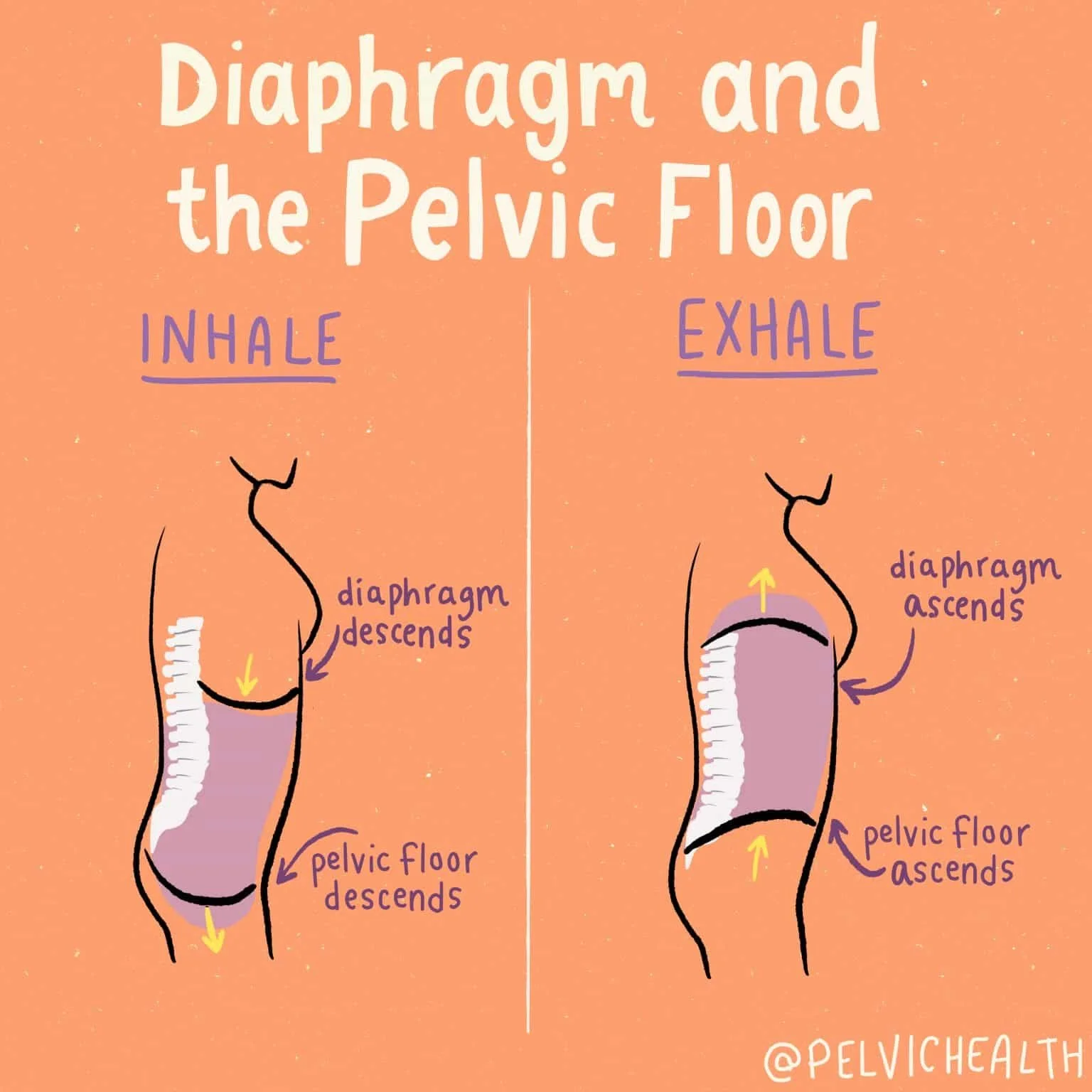
The diaphragm and pelvic floor are teammates. As you inhale, your diaphragm gently lowers, and your pelvic floor naturally lengthens and relaxes. As you exhale, both return to their resting position.
Practicing diaphragmatic breathing helps teach your nervous system that it's safe to let go of unnecessary tension.
How to do it:
Lie on your back or sit comfortably.
Place one hand on your chest and one on your belly.
Breathe in slowly through your nose, allowing your belly and ribs to expand.
Feel your pelvic floor gently soften as you inhale.
Exhale slowly through your mouth without forcing or straining.
Repeat for 1-3 minutes.
2. Wide-Leg Child's Pose
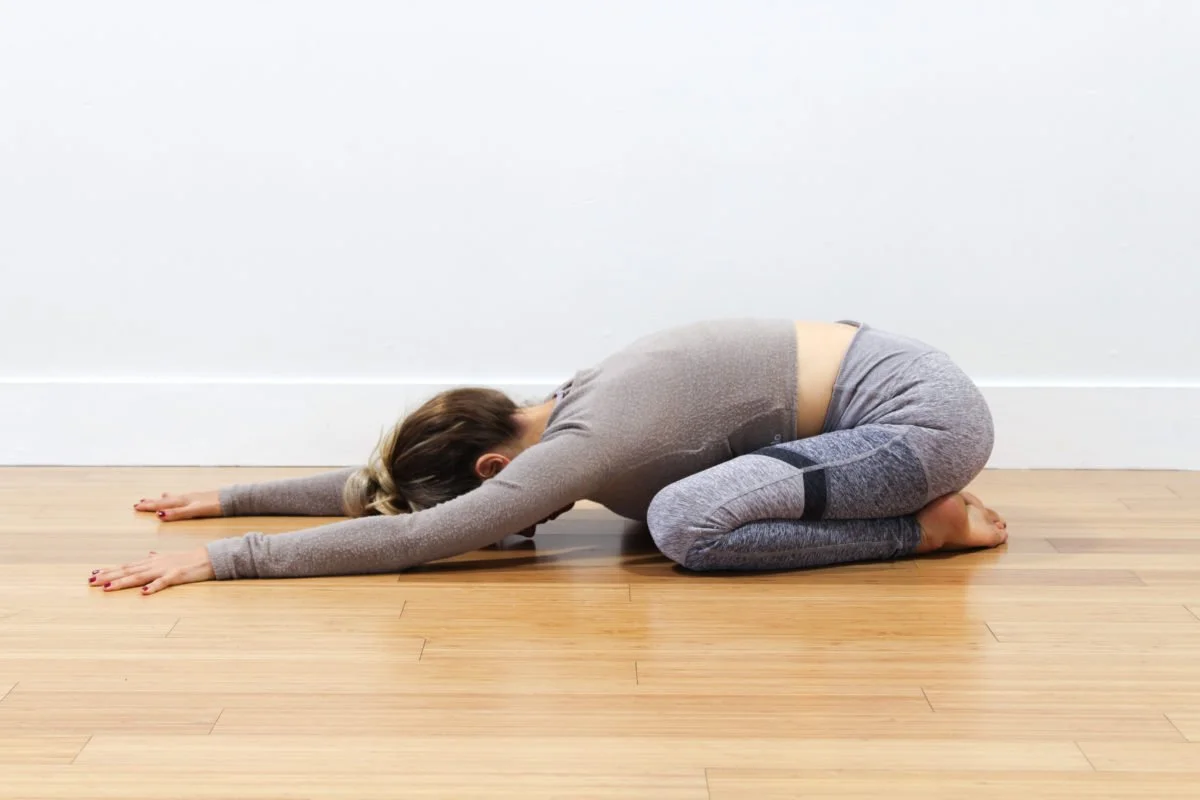
This gentle stretch opens the hips and allows the muscles of the pelvic floor to lengthen naturally.
How to do it:
Kneel on the floor with your knees comfortably wide apart.
Bring your big toes together if comfortable.
Sit your hips back toward your heels.
Reach your arms forward and rest your forehead on the floor or a pillow.
Focus on slow diaphragmatic breathing.
With each inhale, imagine your pelvic floor gently expanding toward the floor.
Hold for 1–2 minutes while breathing comfortably.
3. Happy Baby Pose
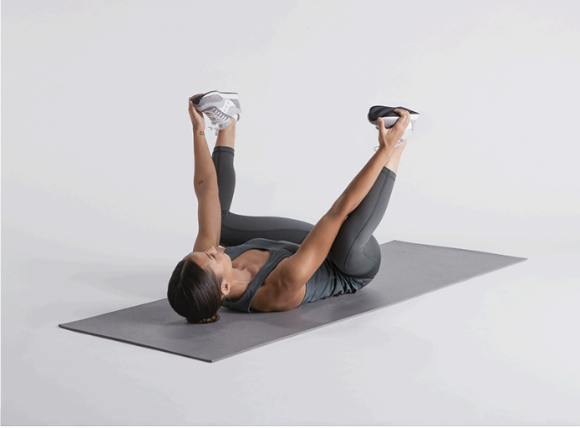
Happy Baby provides a gentle stretch to the hips, inner thighs, and pelvic floor while encouraging relaxation.
How to do it:
Lie on your back.
Bring your knees toward your chest.
Hold the outsides of your feet or your ankles.
Allow your knees to fall toward your armpits without forcing the stretch.
Keep your shoulders relaxed.
Pair the stretch with slow diaphragmatic breathing for 1–2 minutes.
Remember, you should feel a gentle stretch—not pain. If this position is uncomfortable, modify it or consult a pelvic floor physical therapist.
The Takeaway
Your pelvic floor isn't designed to be "on" all the time. Just like every other muscle in your body, it needs to be able to both contract and fully relax to function well.
If you're experiencing symptoms such as:
Pain with intercourse
Pelvic pain
Prolapse
Urinary incontinence
Constipation or difficulty emptying
Difficulty starting your urine stream
Urinary urgency or frequency
Tailbone pain
Hip or low back pain related to pelvic floor tension
...your pelvic floor may benefit from learning to relax before beginning a strengthening program.
Remember: Strong muscles aren't just muscles that can squeeze hard—they're muscles that can move through their full range of motion. Relaxation is not a step backward; it's often the first step toward lasting strength and better pelvic health.
If you're unsure whether your pelvic floor needs relaxation, strengthening, or a combination of both, a pelvic floor physical therapist can perform a comprehensive evaluation and create a treatment plan tailored specifically to you. Contact Abundant Life Physical Therapy and Wellness at abundantlifept.wellness@gmail.com for a consultation today.